
Basic Mathematics and Vectors form the foundational mathematical language required to interpret physical laws and derive complex relationships in kinematics and dynamics. Mastery of these tools is critical as they underpin 100% of the numerical and analytical questions in the JEE and CBSE competency-based frameworks.
JEE Main 2027 Engineering Focus: High-Yield Problem Solving & Negative Marking Defense
- Session 1 Registration Timeline: Registration for JEE Main 2027 Session 1 opens in November on jeemain.nta.nic.in. January exam performance sets your prime percentile baseline.
- Negative Marking Safeguard (-1): Eliminate blind guesswork. Prioritize question selection, dimensional checks, and options elimination to maximize net marks.
- Multi-Concept Problem Linkages: JEE questions integrate multiple domains (e.g. Calculus with Mechanics, or Thermodynamics with Equilibrium) into single composite problems.
- Timed Shift PYQ Practice: Solve at least 15-20 recent shift questions (2021-2026) under a strict 2.5-minute timer per numerical/MCQ.
1. ⚡ High-Speed Formula Sheet & Concept Limits
- Resultant Magnitude: R = √(A² + B² + 2AB cosθ), where θ is the angle between the tails of two vectors A and B.
- Vector in Component Form: A = Ax î + Ay ĵ + Az k̂, where î, ĵ, and k̂ are unit vectors along the Cartesian axes.
3. ⚡ NTA JEE Shift Practice & Rank-Booster Problems
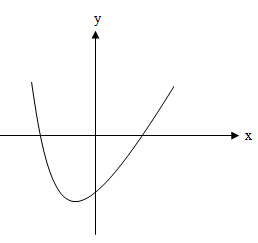
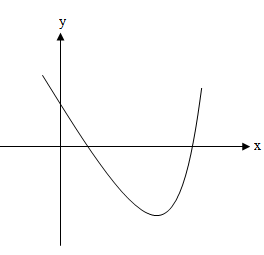
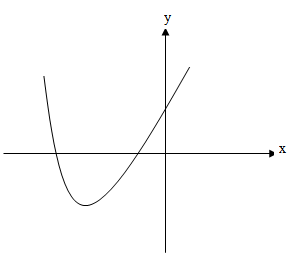
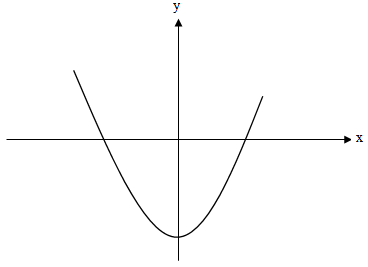
🚀 View Fast Shortcut Solution & Trap Defense
Correct Answer: b
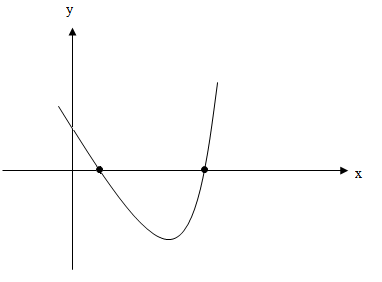
Explanation: 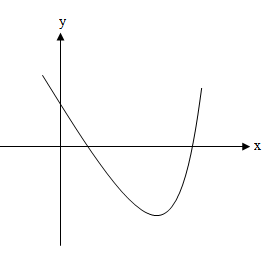 y =x$^{2}$ – 5x + 6
y=(x – 3)(x – 2)
y = 0 when x = 2, 3
🚀 View Fast Shortcut Solution & Trap Defense
Correct Answer: N/A
Explanation: $10\sqrt{2+\sqrt{3}}\quad unit$ $\text{Step}\&\text{nbsp};\text{1}.\&\text{nbsp};\text{Identify}\&\text{nbsp};\text{the}\&\text{nbsp};\text{given}\&\text{nbsp};\text{data}:\&\text{nbsp};\text{Magnitudes}\&\text{nbsp}; \mid \overset{⃗}{A} \mid = 10 \&\text{nbsp};\text{units} , \mid \overset{⃗}{B} \mid = 10 \&\text{nbsp};\text{units} , \text{Inclination}\&\text{nbsp};\text{angles}\&\text{nbsp}; 3 0^{\circ} \&\text{nbsp};\text{and}\&\text{nbsp}; 6 0^{\circ} . \\ \text{Step}\&\text{nbsp};\text{2}.\&\text{nbsp};\text{Determine}\&\text{nbsp};\text{the}\&\text{nbsp};\text{angle}\&\text{nbsp};\text{between}\&\text{nbsp};\text{the}\&\text{nbsp};\text{vectors}:\&\text{nbsp}; \theta = 6 0^{\circ} - 3 0^{\circ} = 3 0^{\circ} . \\ \text{Step}\&\text{nbsp};\text{3}.\&\text{nbsp};\text{Apply}\&\text{nbsp};\text{the}\&\text{nbsp};\text{vector}\&\text{nbsp};\text{addition}\&\text{nbsp};\text{formula}:\&\text{nbsp}; \mid \overset{⃗}{R} \mid = \sqrt{\mid \overset{⃗}{A} \mid^{2} + \mid \overset{⃗}{B} \mid^{2} + 2 \mid \overset{⃗}{A} \mid \times \mid \overset{⃗}{B} \mid cos \theta} . \\ \text{Step}\&\text{nbsp};\text{4}.\&\text{nbsp};\text{Substitute}\&\text{nbsp};\text{the}\&\text{nbsp};\text{numerical}\&\text{nbsp};\text{values}: \\ \mid \overset{⃗}{R} \mid = \sqrt{1 0^{2} + 1 0^{2} + 2 \times 10 \times 10 \times cos 3 0^{\circ}} . \\ \text{Step}\&\text{nbsp};\text{5}.\&\text{nbsp};\text{Use}\&\text{nbsp}; cos 3 0^{\circ} = \frac{\sqrt{3}}{2} : \\ \mid \overset{⃗}{R} \mid = \sqrt{100 + 100 + 200 \times \frac{\sqrt{3}}{2}} = \sqrt{200 + 100 \sqrt{3}} . \\ \text{Step}\&\text{nbsp};\text{6}.\&\text{nbsp};\text{Factor}\&\text{nbsp};\text{out}\&\text{nbsp}; 100 : \\ \mid \overset{⃗}{R} \mid = \sqrt{100 \left(2 + \sqrt{3}\right)} = 10 \sqrt{2 + \sqrt{3}} \&\text{nbsp};\text{units}.$
🚀 View Fast Shortcut Solution & Trap Defense
Correct Answer: a
Explanation: ${\ln\phantom{\rule{\,}{0ex}}x+C}$
🚀 View Fast Shortcut Solution & Trap Defense
Correct Answer: b
Explanation: ${\displaystyle \frac{2\pi }{3}}$ _R_ = _A_ = _B_ Since, the resultant force is given by _R_$^{2}$ = _A_$^{2}$ + _B_$^{2}$ + 2_AB_ cosθ $\Rightarrow cos \theta = - \frac{1}{2} \\$
🚀 View Fast Shortcut Solution & Trap Defense
Correct Answer: c
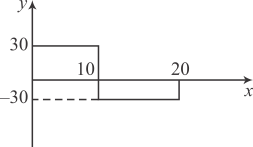
Explanation: Zero
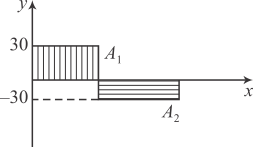 A$_{1}$ = 30x10 = 300 unit
A$_{2}$ = –30x10= –300 unit
∴ Area under the curve = 300–300
= 0
4. ❓ Frequently Asked Questions (Exam Strategy)
❓ How many questions appear from Basic Mathematics and Vectors JEE Main Physics: Authentic Shift PYQs (2021-2026) with 2.5-Min Shortcut Tricks & Trap Defense in JEE Main Session 1?
❓ What is the best approach to avoid negative marks in Basic Mathematics and Vectors JEE Main Physics: Authentic Shift PYQs (2021-2026) with 2.5-Min Shortcut Tricks & Trap Defense?
❓ Does the order of vectors matter in a cross product?
❓ When should I use the parallelogram law versus the triangle law of vector addition?
❓ How do I determine if two vectors are perpendicular?
JEE Main & Advanced High-Yield Chapter Question Bank
Get full digital access to 500+ chapter-wise questions, comprehensive question banks, and authentic exam solutions.
Verified NCERT Curriculum • Instant Digital Access • 100% Satisfaction