Carboxylic Acid and its Derivatives JEE Main Chemistry: Authentic Shift PYQs (2021-2026) with 2.5-Min Shortcut Tricks & Trap Defense
Published: October 28, 2026
Author: NEET & JEE STUDY HUB
🎯 Curriculum & Exam Overview
Carboxylic acids and their derivatives represent the most stable functional group in organic chemistry, serving as the foundation for esterification and amide synthesis pathways. Their acidity and nucleophilic acyl substitution reactions are frequently tested due to their direct relevance in biochemical processes and pharmaceutical synthesis.
🚀 NTA JEE Main 2027 Countdown
January Session 1 Sprint
JEE Main 2027 Engineering Focus: High-Yield Problem Solving & Negative Marking Defense
- Session 1 Registration Timeline: Registration for JEE Main 2027 Session 1 opens in November on jeemain.nta.nic.in. January exam performance sets your prime percentile baseline.
- Negative Marking Safeguard (-1): Eliminate blind guesswork. Prioritize question selection, dimensional checks, and options elimination to maximize net marks.
- Multi-Concept Problem Linkages: JEE questions integrate multiple domains (e.g. Calculus with Mechanics, or Thermodynamics with Equilibrium) into single composite problems.
- Timed Shift PYQ Practice: Solve at least 15-20 recent shift questions (2021-2026) under a strict 2.5-minute timer per numerical/MCQ.
⚡ JEE Main Exam Blueprint & Problem-Solving Guidelines
📊 Expected Weightage
Expected 4 to 8 marks in CBSE board exam (typically 1-2 MCQs + 1 Short/Long Answer or Case Study).
✍️ Examiner & Scoring Insight
Examiners award partial step marks for formula definition, intermediate substitution, correct SI units, and neat labeled diagrams.
1. ⚡ High-Speed Formula Sheet & Concept Limits
1
Carboxylic acids are defined by the presence of a carbonyl group attached to a hydroxyl group, characterized by resonance-stabilized carboxylate anions.
2
Nucleophilic acyl substitution is the signature mechanism where the -OH group of the acid is replaced by various nucleophiles (Cl⁻, OR⁻, NH₂⁻) to form derivatives.
3
Acidity is governed by the inductive (-I) and resonance (+R) effects of substituents attached to the alpha-carbon, which dictate the stability of the conjugate base.
⚡ High-Yield Formula & Reaction Sheet
- Esterification: RCOOH + R'OH ⇌ RCOOR' + H₂O (Reversible process catalyzed by concentrated H₂SO₄ or dry HCl gas).
- Hell-Volhard-Zelinsky (HVZ) Reaction: R-CH₂-COOH + X₂/Red P → R-CH(X)-COOH + HX (Halogenation at the alpha-carbon position only).
⚠️ Common Board Trap Alert
Students often fail to account for the -I effect of electronegative substituents; remember that electron-withdrawing groups increase acidity, while electron-donating groups decrease it by destabilizing the carboxylate ion.
📺 High-yield video lesson for this chapter will premiere on @qbnexa_official.
▶ Subscribe Channel
3. ⚡ NTA JEE Shift Practice & Rank-Booster Problems
Question 1 • MCQ
4 Mark(s)
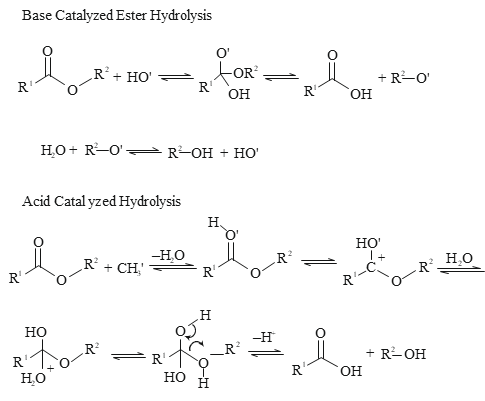
Statement 1 : Hydrolysis of ester catalysed by base is irreversible but hydrolysis of ester catalysed by acid is reversible.
Statement 2 : In acid catalysed ester hydrolysis anhydride is formed and in base catalysed hydrolysis ether is formed.
(A) Statement 1 is True, Statement 2 is True; Statement 2 is correct explanation for Statement 1.
(B) Statement 1 is True, Statement 2 is True; Statement 2 is not correct explanation for Statement 1.
(C) Statement 1 is True, Statement 2 is False.
(D) Statement 1 is False, Statement 2 is True.
🚀 View Fast Shortcut Solution & Trap Defense
Correct Answer: c
Explanation: Statement 1 is True, Statement 2 is False.
Question 2 • MCQ
4 Mark(s)
Which one of the following cannot be formed by the reaction of dry ice with Grignard’s reagent?
(A) cetic acid
(B) Formic acid
(C) Propanoic acid
(D) ll of the above
🚀 View Fast Shortcut Solution & Trap Defense
Correct Answer: b
Explanation: Formic acid
The reaction is
 ∴ R ≠ H
Question 3 • MCQ
4 Mark(s)
Lactic acid, CH$_{3}$CH(OH)COOH molecule shows
(A) Geometrical isomerism
(B) Metamerism
(C) Optical isomerism
(D) Tautomerism
🚀 View Fast Shortcut Solution & Trap Defense
Correct Answer: c
Explanation: Optical isomerism
Latice acid is asymmetric molecule so it show optical isomerism.
Question 4 • MCQ
4 Mark(s)
Given below are two statements :
Statement I : The esterification of carboxylic acid with an alcohol is a nucleophilic acyl substitution.
Statement II : Electron withdrawing groups in the carboxylic acid will increase the rate of esterification reaction.
Choose the most appropriate option :
(A) Both Statement I and Statement II are correct.
(B) Both Statement I and Statement II are incorrect.
(C) Statement I is correct but Statement II is incorrect.
(D) Statement I is incorrect but Statement II is correct.
🚀 View Fast Shortcut Solution & Trap Defense
Correct Answer: a
Explanation: Both Statement I and Statement II are correct.
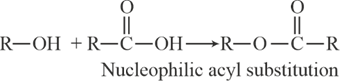 electron withdrawing group on carboxylic acid will increase the rate of esterification
Question 5 • Numerical
4 Mark(s)
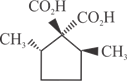
How many product will be formed when following compound undergo de-carboxylation?
🚀 View Fast Shortcut Solution & Trap Defense
Correct Answer: 1
Explanation: 
4. ❓ Frequently Asked Questions (Exam Strategy)
❓ How many questions appear from Carboxylic Acid and its Derivatives JEE Main Chemistry: Authentic Shift PYQs (2021-2026) with 2.5-Min Shortcut Tricks & Trap Defense in JEE Main Session 1?
Typically 1 to 2 questions (4 to 8 marks) appear from Carboxylic Acid and its Derivatives JEE Main Chemistry: Authentic Shift PYQs (2021-2026) with 2.5-Min Shortcut Tricks & Trap Defense, frequently featuring combined multi-topic concepts.
❓ What is the best approach to avoid negative marks in Carboxylic Acid and its Derivatives JEE Main Chemistry: Authentic Shift PYQs (2021-2026) with 2.5-Min Shortcut Tricks & Trap Defense?
Master standard shortcut formulas, verify boundary states (e.g. t=0, infinity), and skip uncertain numerical value questions.
❓ Why are carboxylic acids stronger acids than phenols?
The carboxylate ion formed after dissociation is resonance-stabilized by two equivalent oxygen atoms. In contrast, the phenoxide ion exhibits non-equivalent resonance structures, making the carboxylate ion significantly more stable.
❓ What is the order of reactivity for nucleophilic acyl substitution in derivatives?
Acid chlorides > Acid anhydrides > Esters > Amides. This order follows the leaving group ability: the weaker the base (better leaving group), the more reactive the derivative.
❓ Can tertiary alcohols be easily oxidized to carboxylic acids?
No, tertiary alcohols do not possess alpha-hydrogen atoms, making them resistant to oxidation under standard laboratory conditions. They instead undergo elimination or bond cleavage under harsh oxidizing agents.
Official Complete Study Package
JEE Main & Advanced High-Yield Chapter Question Bank
Get full digital access to 500+ chapter-wise questions, comprehensive question banks, and authentic exam solutions.
Verified NCERT Curriculum • Instant Digital Access • 100% Satisfaction
💬
Join the Official JEE Main & Advanced WhatsApp Community for daily question drops & study notes
Join Channel
🎓Explore All QBNEXA Curriculum Hubs
Need more chapters and complete test sets?
Access our complete 12 Lakhs MCQ repository, solved past papers, and error-free test series.
← Back to Home
