ACADEMIC ASSETS 3,50,000+ Curated MCQs • 22,000+ Solved Past Papers • 100% Verified Keys
Since 2018
qbnexa logo
qbnexa JEE 99%ile Engineering

CBSE JEE Main & Advanced Chemistry: Atomic Structure Important Questions & Complete Chapter Notes

Published: October 21, 2026 Author: NEET & JEE STUDY HUB
🎯 Curriculum & Exam Overview

Comprehensive chapter breakdown covering core theoretical principles, foundational laws, and structured step-by-step problem-solving methods strictly aligned with the updated 2026-27 curriculum.

1. 📚 Quick Revision Notes & Core Theory

1
Strict adherence to NCERT definitions, standard SI units, and official notation.
2
Multi-step conceptual derivation from fundamental postulates to advanced applications.
3
High-frequency board-pattern problem classifications and key diagnostic steps.
⚡ High-Yield Formula & Reaction Sheet
  • Primary Governing Equation: Verify dimensions and stoichiometry across both sides.
  • Proportionality & Limiting Conditions: Identify critical boundary states and constants.
⚠️ Common Board Trap Alert
Watch out for unit conversions (e.g. cm to meters, Celsius to Kelvin) and sign conventions in directional calculations.
📺 High-yield video lesson for this chapter will premiere on @qbnexa_official.
▶ Subscribe Channel

3. 📝 Interactive Chapter DPP & Practice Questions

Question 1 • MCQ 🔥 MHT CET (2020)
4 Mark(s)
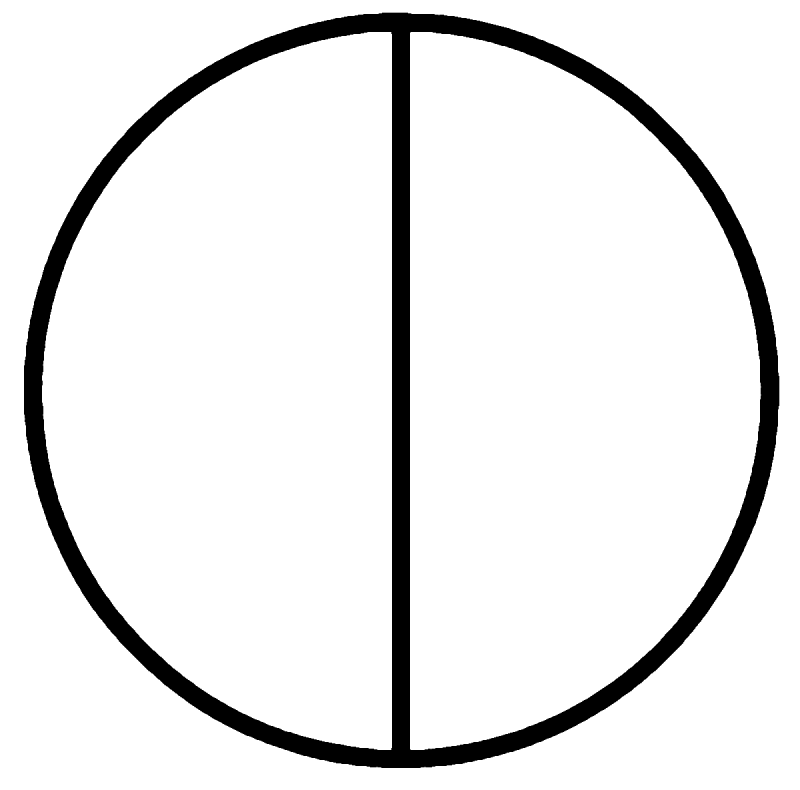
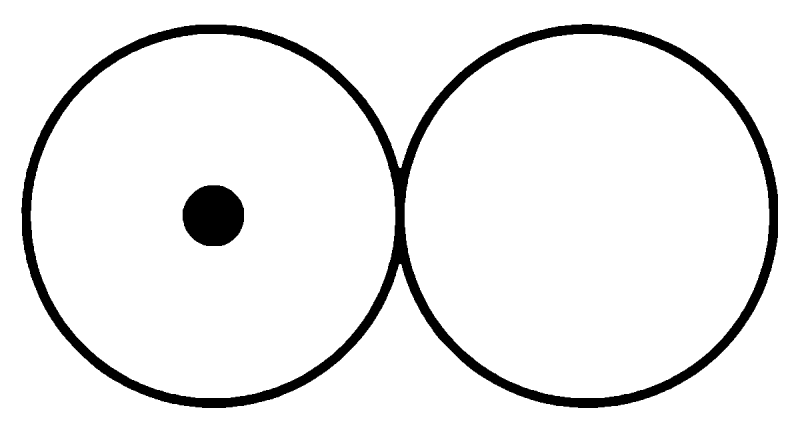
Identify the symbol used for water according to Dalton's atomic theory?
(A) ![image](https://cdn.qbnexa.com/mhtcet/img_4d2283f54616.png)
(B) ![image](https://cdn.qbnexa.com/mhtcet/img_0d56f609e428.png)
(C) ![image](https://cdn.qbnexa.com/mhtcet/img_b983cac0751d.png)
(D) ![image](https://cdn.qbnexa.com/mhtcet/img_dbd6c390c952.png)
💡 View Step-by-Step Solution & Answer Key

Correct Answer: (d)

Explanation: According to Dalton's atomic theory, symbol of hydrogen is ![image](https://cdn.qbnexa.com/mhtcet/img_dbd6c390c952.png) and for oxygen ![image](https://cdn.qbnexa.com/mhtcet/img_29f1e5a2b149.png) and for sulphur ![image](https://cdn.qbnexa.com/mhtcet/img_4d2283f54616.png) and for nitrogen ![image](https://cdn.qbnexa.com/mhtcet/img_0d56f609e428.png) . In the given option ![image](https://cdn.qbnexa.com/mhtcet/img_365d9ffcc232.png) this symbol represent the water molecule.

Question 2 • MCQ 🔥 MHT CET (2026)
4 Mark(s)
What is the energy of an electron in a hydrogen atom in a stationary state corresponding to n = 2 ?
(A) $-5.45 \times 10^{-19}$ J
(B) $-2.40 \times 10^{-19}$ J
(C) $-4.35 \times 10^{-18}$ J
(D) $-6.70 \times 10^{-18}$ J
💡 View Step-by-Step Solution & Answer Key

Correct Answer: (a)

Explanation: For a hydrogen atom, the energy of an electron in the $n$th stationary state is $ E_n=\frac{-2.18\times10^{-18}}{n^2}\ \text{J} $ For $n=2$, $ E_2=\frac{-2.18\times10^{-18}}{2^2} =\frac{-2.18\times10^{-18}}{4} =-5.45\times10^{-19}\ \text{J} $ The negative sign shows that the electron is bound to the nucleus. $ \boxed{-5.45\times10^{-19}\ \text{J}} $ Hence, **Option A** is correct.

Question 3 • MCQ 🔥 TS EAMCET (2025)
4 Mark(s)
Work functions of four metals $M_1, M_2, M_3$ and $M_4$ are $4.8,4.3,4.75$ and 3.75 eV respectively. The metals which do not show photoelectric effect when light of wavelength 310 nm falls on the metals are
(A) $M_1, M_2$ only
(B) $M_1, M_3$ only
(C) $M_1, M_2, M_3$ only
(D) $M_1, M_2, M_4$ only
💡 View Step-by-Step Solution & Answer Key

Correct Answer: (c)

Explanation: Energy of photon $ E=\frac{1240}{\lambda(\mathrm{in} \mathrm{~nm})}=\frac{1240}{310}=4.0 \mathrm{eV} $ Given work functions $M_1=4.8 \mathrm{eV}$ $M_2=4.3 \mathrm{eV}$ $M_3=4.75 \mathrm{eV}$ $\mathrm{M}_4=3.75 \mathrm{eV}$ Only metals with $\phi \leq 4.0 \mathrm{eV}$ will emit electrons. $M_1, M_2$ and $M_3$ have work functions greater than 4.0 eV thus, do not show no photoelectric effect.

Question 4 • MCQ 🔥 VITEEE (2022)
4 Mark(s)
In which of the following photoelectric effect is observed?
(A) Mg
(B) Ba
(C) Ge
(D) Cs
💡 View Step-by-Step Solution & Answer Key

Correct Answer: (d)

Explanation: Only the group I elements of periodic table exhibit the photoelectric effect because they are highly electropositive metals and have low ionisation enthalpy. Hence, only Cs shows photoelectric effect among the given options.

Question 5 • MCQ 🔥 MHT CET (2023)
4 Mark(s)
Which of the following statements is NOT true about Bohr atomic model?
(A) An electron in hydrogen atom can move around the nucleus in one of the many possible orbits of fixed radius and energy.
(B) The energy of an electron in the orbit does not change with time.
(C) An electron can move only in those orbits for which angular momentum is integral multiple of $\frac{\mathrm{h}}{2 \pi}$.
(D) This model can explain the ability of atoms to form molecules by chemical bonds.
💡 View Step-by-Step Solution & Answer Key

Correct Answer: (d)

Explanation: Bohr atomic model could not explain the ability of atoms to form molecules by chemical bonds.

4. ❓ Frequently Asked Questions (Exam Strategy)

❓ What are the most scoring topics in CBSE JEE Main & Advanced Chemistry: Atomic Structure Important Questions & Complete Chapter Notes?
Direct formula applications, NCERT exemplar problem types, and standard step-by-step derivations carry the highest mark density.
❓ How should I revise CBSE JEE Main & Advanced Chemistry: Atomic Structure Important Questions & Complete Chapter Notes for upcoming exams?
First master the core definitions and formula sheet, then solve 10-15 authentic PYQs with timed condition constraints.
❓ Are step-by-step solutions included in this question bank?
Yes, every question includes complete transparent reasoning, correct answer keys, and speed shortcuts.
Official Complete Study Package

JEE Main & Advanced High-Yield Chapter Question Bank

Get full digital access to 500+ chapter-wise questions, comprehensive question banks, and authentic exam solutions.

Verified NCERT Curriculum • Instant Digital Access • 100% Satisfaction

💬 Join the Official Study Community for daily question drops & discussion
Join Channel

Need more chapters and complete test sets?

Access our complete 12 Lakhs MCQ repository, solved past papers, and error-free test series.

← Back to Home