CBSE JEE Main & Advanced Chemistry: Alcohol Phenols And Ethers Important Questions & Complete Chapter Notes
Published: October 20, 2026
Author: NEET & JEE STUDY HUB
🎯 Curriculum & Exam Overview
This chapter explores the functional group chemistry of alcohols, phenols, and ethers, focusing on their synthesis, acidity, and nucleophilic substitution reactions. It carries high weightage due to the predictable mechanistic questions on electrophilic aromatic substitution and acid-catalyzed dehydration appearing frequently in competitive exams.
1. 📚 Quick Revision Notes & Core Theory
1
Alcohols are characterized by the sp3 hybridization of the carbon bonded to the hydroxyl group, whereas phenols feature an -OH group directly attached to an sp2 hybridized carbon of an aromatic ring.
2
The acidity of alcohols and phenols is governed by the stability of the conjugate base (alkoxide or phenoxide ion); resonance stabilization makes phenols significantly more acidic than alcohols.
3
Ether cleavage via nucleophilic substitution (SN1/SN2) with concentrated HI/HBr is a signature reaction determined by the stability of the resulting carbocation or steric hindrance of the alkyl groups.
⚡ High-Yield Formula & Reaction Sheet
- Acid-catalyzed dehydration of alcohols: R-CH2-CH2-OH → R-CH=CH2 + H2O (occurs via carbocation formation and follows Saytzeff's rule).
- Williamson Synthesis: R-ONa + R'-X → R-O-R' + NaX (primary alkyl halides are preferred to prevent elimination side-reactions).
⚠️ Common Board Trap Alert
Students often fail to identify the major product in the acid-catalyzed dehydration of secondary/tertiary alcohols because they forget to perform the necessary 1,2-hydride or methyl shift to form a more stable carbocation intermediate.
📺 High-yield video lesson for this chapter will premiere on @qbnexa_official.
▶ Subscribe Channel
3. 📝 Interactive Chapter DPP & Practice Questions
Question 1 • MCQ
🔥 MHT CET (2024)
4 Mark(s)
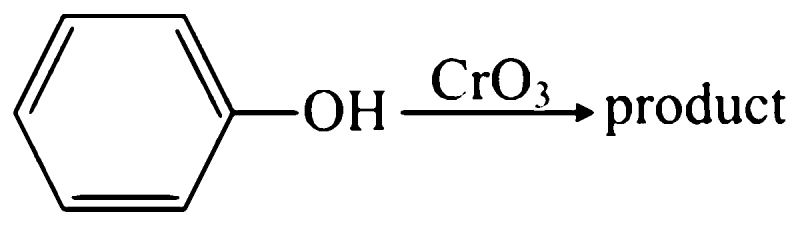
Identify the product of following reaction.
(A) Benzene
(B) Benzoic acid
(C) Benzaldehyde
(D) p-Benzoquinone
💡 View Step-by-Step Solution & Answer Key
Correct Answer: (d)
Explanation: 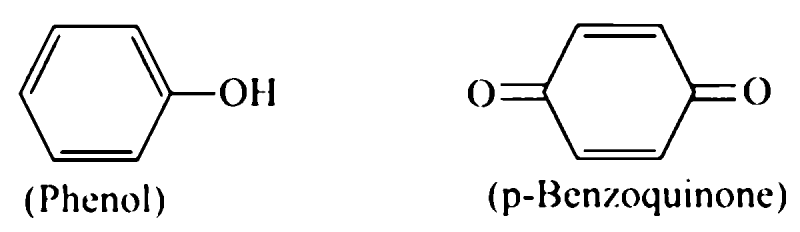
Question 2 • MCQ
🔥 MHT CET (2025)
4 Mark(s)
Identify the product ' $A$ ' in the following reaction,
Anisole $\xrightarrow[398 \mathrm{~K}]{\mathrm{HI}} \mathrm{A}$ + Iodomethane
(A) Aniline
(B) Iodobenzene
(C) Benzenol
(D) Benzene
💡 View Step-by-Step Solution & Answer Key
Correct Answer: (c)
Explanation: 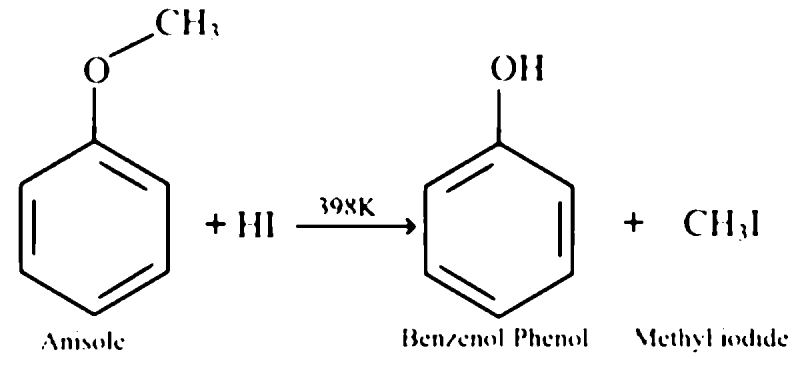
Question 3 • MCQ
🔥 COMEDK (2026)
4 Mark(s)
$ \text { Identify X, Y and Z. } $
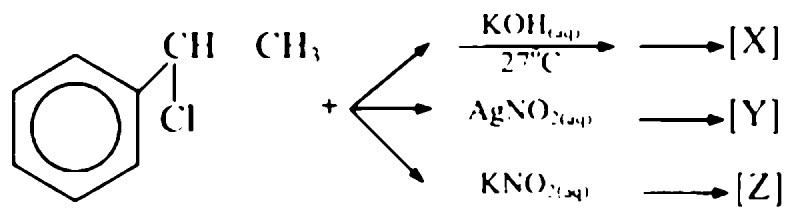
(A) 
(B) 
(C) 
(D) 
💡 View Step-by-Step Solution & Answer Key
Correct Answer: (d)
Explanation: ---
Question 4 • MCQ
🔥 MHT CET (2026)
4 Mark(s)
Which of the following ethers is gaseous at room temperature ?
(A) 1 - Methoxypropane
(B) 1 - Ethoxypropane
(C) Methoxyethane
(D) Ethoxyethane
💡 View Step-by-Step Solution & Answer Key
Correct Answer: (c)
Explanation: The ether which is gaseous at room temperature is:
$\boxed{\text{Option C: Methoxyethane}}$
Methoxyethane has the structure:
$\mathrm{CH_3OCH_2CH_3}$
Ethers have lower boiling points than alcohols because ether molecules do not form hydrogen bonds with each other. Among the given ethers, methoxyethane has a relatively low molar mass, so the intermolecular forces are weak.
Its boiling point is about:
$7.4^\circ \mathrm{C}$
Room temperature is around:
$25^\circ \mathrm{C}$
Since room temperature is higher than its boiling point, methoxyethane exists as a gas at room temperature.
So, the correct answer is:
$\boxed{\text{Methoxyethane}}$
Question 5 • MCQ
🔥 COMEDK (2026)
4 Mark(s)
An aliphatic compound $[\mathrm{X}]$, Molecular formula $\left(\mathrm{C}_4 \mathrm{H}_{10} \mathrm{O}\right)$ can be prepared from Acetone and $\mathrm{R}-\mathrm{Mg}-\mathrm{X}$.
$[\mathrm{X}]$ with $20 \%$ Phosphoric acid gives an unsaturated compound $\mathrm{C}_4 \mathrm{H}_8[\mathrm{Y}]$. Compound $[\mathrm{Y}]$ is also obtained on heating $[\mathrm{X}]$ with Copper metal at 573 K . $[\mathrm{X}]$ shows no reaction with PCC but on heating with acidified $\mathrm{KMnO}_4$ it forms Acetone $+\mathrm{CO}_2+\mathrm{H}_2 \mathrm{O}$.
Compounds $[\mathrm{X}]$ and $[\mathrm{Y}]$ are $\_\_\_\_$ and $\_\_\_\_$
(A) [X]: Butan-2-ol [Y]: But-2-ene
(B) [X]: 2-Methylpropan-1-ol [Y]: But-1-ene
(C) [X]: 2-Methylpropan-2-ol [Y]: 2-Methylpropene
(D) [X]: Butan-1-ol [Y]: But-1-ene
💡 View Step-by-Step Solution & Answer Key
Correct Answer: (c)
Explanation: ---
4. ❓ Frequently Asked Questions (Exam Strategy)
❓ Why are phenols more acidic than alcohols?
The phenoxide ion formed after deprotonation is resonance-stabilized by the aromatic ring, which lowers the Gibbs free energy of the conjugate base. Alcohols lack this resonance stabilization, making their alkoxide ions relatively unstable.
❓ What is the product of the reaction between anisole and HI?
The reaction produces phenol and methyl iodide because the bond between oxygen and the phenyl ring has partial double-bond character. Thus, the nucleophile attacks the smaller methyl group via an SN2 mechanism.
❓ How do we distinguish between primary, secondary, and tertiary alcohols?
The Lucas test is used, where the addition of Lucas reagent (conc. HCl + ZnCl2) results in immediate turbidity for tertiary alcohols, turbidity within 5-10 minutes for secondary alcohols, and no reaction at room temperature for primary alcohols.
Official Complete Study Package
JEE Main & Advanced High-Yield Chapter Question Bank
Get full digital access to 500+ chapter-wise questions, comprehensive question banks, and authentic exam solutions.
Verified NCERT Curriculum • Instant Digital Access • 100% Satisfaction
💬
Join the Official Study Community for daily question drops & discussion
Join Channel
🎓Explore All QBNEXA Curriculum Hubs
Need more chapters and complete test sets?
Access our complete 12 Lakhs MCQ repository, solved past papers, and error-free test series.
← Back to Home
