
Isomerism involves compounds sharing an identical molecular formula but exhibiting distinct spatial arrangements or structural connectivity. It is a high-yield topic because it foundationalizes both organic reactivity and coordination chemistry, frequently appearing in competency-based and application-oriented exam questions.
JEE Main 2027 Engineering Focus: High-Yield Problem Solving & Negative Marking Defense
- Session 1 Registration Timeline: Registration for JEE Main 2027 Session 1 opens in November on jeemain.nta.nic.in. January exam performance sets your prime percentile baseline.
- Negative Marking Safeguard (-1): Eliminate blind guesswork. Prioritize question selection, dimensional checks, and options elimination to maximize net marks.
- Multi-Concept Problem Linkages: JEE questions integrate multiple domains (e.g. Calculus with Mechanics, or Thermodynamics with Equilibrium) into single composite problems.
- Timed Shift PYQ Practice: Solve at least 15-20 recent shift questions (2021-2026) under a strict 2.5-minute timer per numerical/MCQ.
1. 📚 Quick Revision Notes & Core Theory
- Degree of Unsaturation (Double Bond Equivalent): DU = C + 1 - (H + X - N)/2; used to determine the total number of rings and pi bonds in an isomer.
- Specific Rotation ([α]): [α] = α / (l × c), where α is the observed rotation, l is the path length in decimeters, and c is the concentration in g/mL.
3. 📝 Interactive Chapter DPP & Practice Questions
💡 View Step-by-Step Solution & Answer Key
Correct Answer: (c)
Explanation: The structure is: $ \mathrm{CH_3-CH(Br)-CH(CH_3)-CH(CH_3)-CH(CH_3)-CH_3} $ A carbon atom is chiral when it is attached to four different groups. $C_2$ is chiral: attached to $\mathrm{H}$, $\mathrm{Br}$, $\mathrm{CH_3}$, and the remaining carbon chain. $C_3$ is chiral: its four attached groups are different. $C_4$ is also chiral because the carbon chains on its two sides are different. $C_5$ is not chiral because it is attached to two identical $\mathrm{CH_3}$ groups. Hence, the number of chiral carbon atoms is $ \boxed{3} $ So, the correct answer is **Option C**.
💡 View Step-by-Step Solution & Answer Key
Correct Answer: (b)
Explanation: The structure of 2-iodo-3,4,5-trimethylhexane is: $ \mathrm{CH_3-CH(I)-CH(CH_3)-CH(CH_3)-CH(CH_3)-CH_3} $ A carbon atom is chiral when it is attached to four different groups. $C_2$ is chiral: it is attached to $\mathrm{I}$, $\mathrm{H}$, $\mathrm{CH_3}$, and the remaining carbon chain. $C_3$ is chiral: its four attached groups are different. $C_4$ is chiral: the carbon chains on its two sides are different, along with $\mathrm{H}$ and $\mathrm{CH_3}$. $C_5$ is not chiral because it is attached to two identical $\mathrm{CH_3}$ groups. Hence, the number of chiral carbon atoms is $ \boxed{3} $ **Option B**.
💡 View Step-by-Step Solution & Answer Key
Correct Answer: (c)
Explanation: Amine with molecular formula $\mathrm{C}_3 \mathrm{H}_9 \mathrm{~N}$ have two primary structures. These are as follows: 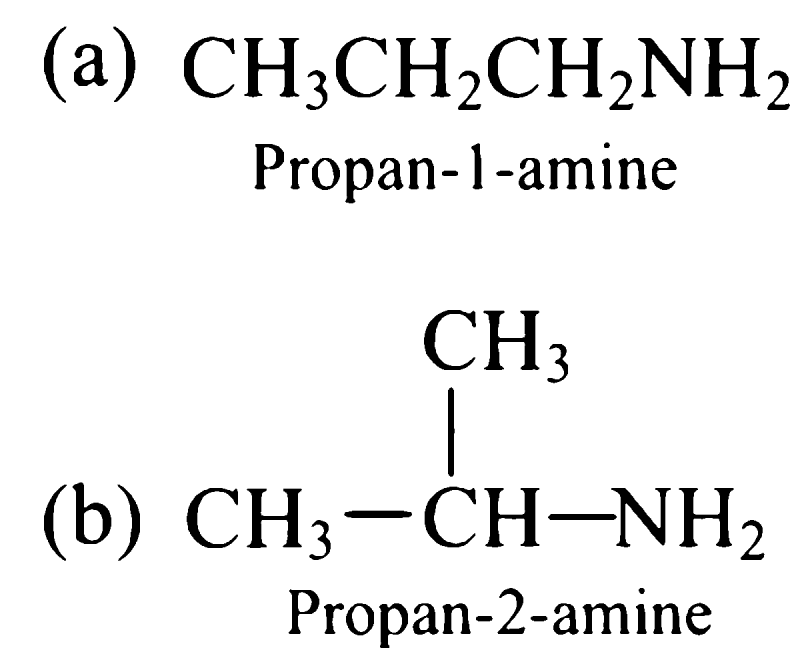 Other isomers are not primary amines.
💡 View Step-by-Step Solution & Answer Key
Correct Answer: (b)
Explanation: Propanone and propanal have the same molecular formula but different functional group i.e. ketone and aldehyde respective. Hence, these two are the functional isomers of each other. 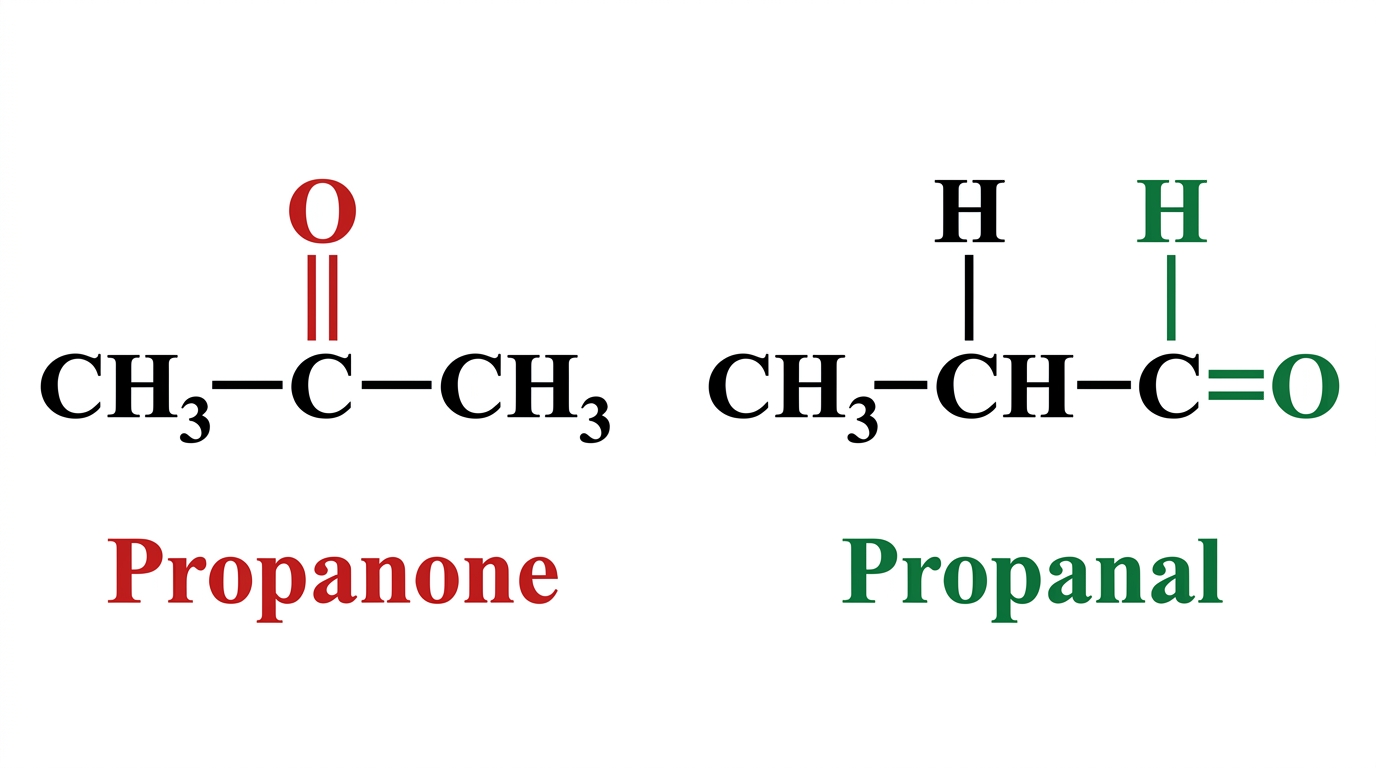
💡 View Step-by-Step Solution & Answer Key
Correct Answer: (d)
Explanation: An alkane will exhibit five structural isomers when there are 6 moles of carbon atoms present in it. The structural isomers of alkane $\mathrm{C}_6 \mathrm{H}_{14}$ are as follows: 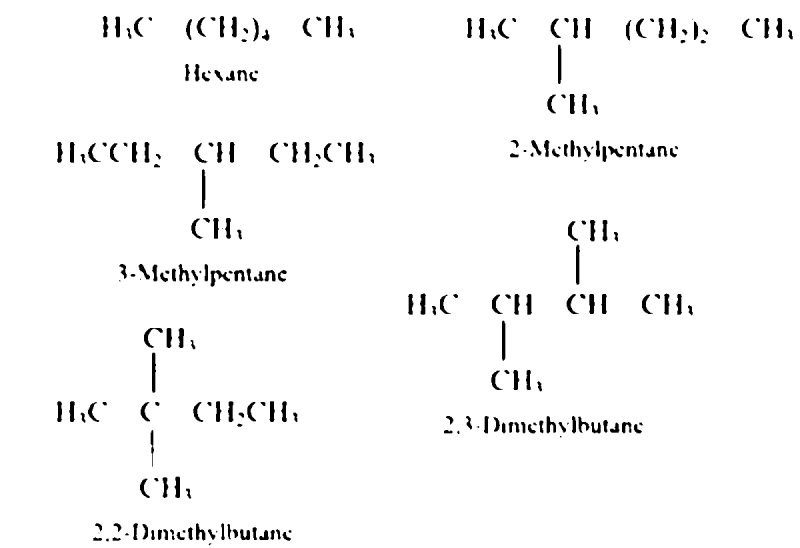
4. ❓ Frequently Asked Questions (Exam Strategy)
❓ How many questions appear from JEE Main Chemistry: Isomerism High-Yield Practice Questions, Formulas & PYQ Breakdown (2026-27) in JEE Main Session 1?
❓ What is the best approach to avoid negative marks in JEE Main Chemistry: Isomerism High-Yield Practice Questions, Formulas & PYQ Breakdown (2026-27)?
❓ How do I distinguish between E/Z and Cis/Trans isomerism?
❓ Are enantiomers and diastereomers the same?
❓ Does meso compound show optical activity?
JEE Main & Advanced High-Yield Chapter Question Bank
Get full digital access to 500+ chapter-wise questions, comprehensive question banks, and authentic exam solutions.
Verified NCERT Curriculum • Instant Digital Access • 100% Satisfaction