
Comprehensive chapter breakdown covering core theoretical principles, foundational laws, and structured step-by-step problem-solving methods strictly aligned with the updated 2026-27 curriculum.
JEE Main 2027 Engineering Focus: High-Yield Problem Solving & Negative Marking Defense
- Session 1 Registration Timeline: Registration for JEE Main 2027 Session 1 opens in November on jeemain.nta.nic.in. January exam performance sets your prime percentile baseline.
- Negative Marking Safeguard (-1): Eliminate blind guesswork. Prioritize question selection, dimensional checks, and options elimination to maximize net marks.
- Multi-Concept Problem Linkages: JEE questions integrate multiple domains (e.g. Calculus with Mechanics, or Thermodynamics with Equilibrium) into single composite problems.
- Timed Shift PYQ Practice: Solve at least 15-20 recent shift questions (2021-2026) under a strict 2.5-minute timer per numerical/MCQ.
1. ⚡ High-Speed Formula Sheet & Concept Limits
- Primary Governing Equation: Verify dimensions and stoichiometry across both sides.
- Proportionality & Limiting Conditions: Identify critical boundary states and constants.
3. ⚡ NTA JEE Shift Practice & Rank-Booster Problems
🚀 View Fast Shortcut Solution & Trap Defense
Correct Answer: (e)
Explanation: $\left|\;\frac{1+ai}{b+i}\right|=1$ $|1+ia|=|b+i|$ $a^2+1=b^2+1 \Rightarrow a=\pm b \Rightarrow b=-a \;\;\;\text{ as }\; ab<0$ $(a+ib) \;\text{ lies on }\; |z-1|=|2z|$ $|a+ib-1|=2|a+ib|$ $(a-1)^2+b^2=4(a^2+b^2)$ $(a-1)^2=a^2=4(2a^2)$ $1-2a=6a^2 \Rightarrow 6a^2+2a-1=0$ $a=\;\frac{-2 \pm \sqrt{28}}{12}=\;\frac{-1 \pm \sqrt{7}}{6}$ $a=\;\frac{\sqrt{7}-1}{6}$ and $b=\;\frac{1-\sqrt{7}}{6}$ $[a]=0$ $\therefore \; \frac{1+[a]}{4b} = \frac{6}{4(1-\sqrt{7})} = -\left(\;\frac{1+\sqrt{7}}{4}\right)$ Similarly when $a=\;\frac{-1-\sqrt{7}}{6}$ and $b=\;\frac{1+\sqrt{7}}{6}$ then $[a]=-1$ $\therefore \; \frac{1+[a]}{4b} = \frac{1-1}{4 \times \frac{1+\sqrt{7}}{6}} = 0$
🚀 View Fast Shortcut Solution & Trap Defense
Correct Answer: (a)
Explanation: $z=(2+3 i)$ $\Rightarrow z^5=(2+3 i)((2+3 i)^2)^2$ $=(2+3 i)(-5+12 i)^2$ $=(2+3 i)(-119-120 i)$ $=-238-240 i-357 i+360$ $=122-597 i$ $\overline{z}^5=122+597 i$ $z^5+\overline{z}^5=244$
🚀 View Fast Shortcut Solution & Trap Defense
Correct Answer: (d)
Explanation: $\sqrt{(x-2)^2+y^2}=2\sqrt{(x-3)^2+y^2}$ $=x^2+y^2-4x+4=4x^2+4y^2-24x+36$ $=3x^2+3y^2-20x+32=0$ $=x^2+y^2-\frac{20}{3}x+\frac{32}{3}=0$ $=(\alpha, \beta)=\left(\frac{10}{3},0\right)$ $\gamma=\sqrt{\frac{100}{9}-\frac{32}{3}}=\sqrt{\frac{4}{9}}=\frac{2}{3}$ $3(\alpha, \beta, \gamma)=3\left(\frac{10}{3}+\frac{2}{3}\right)$ $=12$
🚀 View Fast Shortcut Solution & Trap Defense
Correct Answer: 310
Explanation: Given, $\frac{(-1+i\sqrt{3})^{21}}{(1-i)^{24}} + \; \frac{(1+i\sqrt{3})^{21}}{(1+i)^{24}} = k$ $\because \;\; -1+i\sqrt{3}=2 e^{i 2\pi/3}$ $1+i\sqrt{3}=2 e^{i\pi/3}$ $1-i=\sqrt{2} e^{-i\pi/4}$ $1+i=\sqrt{2} e^{i\pi/4}$ Now, $\frac{(2 e^{i 2\pi/3})^{21}}{(\sqrt{2} e^{-i\pi/4})^{24}} + \; \frac{(2 e^{i\pi/3})^{21}}{(\sqrt{2} e^{i\pi/4})^{24}}$ $= \frac{2^{21} \cdot e^{i 14\pi}}{2^{12} \cdot e^{-i 6\pi}} + \frac{2^{21} \cdot e^{i 7\pi}}{2^{12} \cdot e^{i 6\pi}}$ $= 2^{9} \cdot e^{i20\pi} + 2^{9} \cdot e^{i\pi}$ $= 2^{9}(1) + 2^{9}(-1)$ $n = \left[ \begin{array}{ll} 2^{9}-2^{9} & =0=k \\ n & =[\lvert k\rvert]=0 \\ \;\text{ Now, }\; \sum\limits_{i=0}^{5}(j+5)^{2}-\sum\limits_{i=0}^{5}(j+5) & \\ = & \{[5^{2}+6^{2}+7^{2}+8^{2}+9^{2}+10^{2}]-[5+6+7+8+9+10]\} \\ = & \{[(1^{2}+2^{2}+3^{2}+\dots+10^{2})-(1^{2}+2^{2}+\dots+4^{2})]\} \\ & -[(1+2+3+\dots+10)-(1+2+3+4)] \\ = & \{[\;\frac{10 \times 11 \times 21}{6}-\;\frac{4 \times 5 \times 9}{6}]-\left[\;\frac{10 \times 11}{2}-\;\frac{4 \times 5}{2}\right]\} \\ = & (385-30)-(55-10) \\ = & 355-45=310 \end{array} \right]$
🚀 View Fast Shortcut Solution & Trap Defense
Correct Answer: (c)
Explanation: Concept: The first condition describes points equidistant from two fixed points, yielding a line. The second condition gives a circle-like locus. Explanation: From $\left|\frac{z-6i}{z-2i}\right| = 1$ , we get $|z-6i| = |z-2i|$ . This means $z$ is equidistant from $(0,2)$ and $(0,6)$ . Hence $z$ lies on the perpendicular bisector of these points, which is the horizontal line $y=4$ . So $z = x + 4i$ , with $x \in \mathbb{R}$ . Substitute $z = x+4i$ into $\left|\frac{z-8+2i}{z+2i}\right| = \frac{3}{5}$ . This gives $\frac{|x+4i-8+2i|}{|x+4i+2i|} = \frac{3}{5}$ $\Rightarrow \frac{|x-8+6i|}{|x+6i|} = \frac{3}{5}$ . Cross-multiplying: $5|x-8+6i| = 3|x+6i|$ . Write magnitudes: $5\sqrt{(x-8)^2+6^2} = 3\sqrt{x^2+6^2}$ . Square both sides: $25[(x-8)^2+36] = 9(x^2+36)$ . Expand: $25(x^2 -16x +64+36) = 9x^2+324$ $\Rightarrow 25x^2 -400x +2500 = 9x^2+324$ $\Rightarrow 16x^2 -400x +2176 = 0$ Divide by 16: $x^2 -25x +136 = 0$ Factor: $(x-17)(x-8)=0$ Thus $x = 8$ or $x = 17$ . So the set $S = \{8+4i,\; 17+4i\}$ . Now compute sum of squares of moduli: $|8+4i|^2 = 8^2+4^2 = 64+16 = 80$ $|17+4i|^2 = 17^2+4^2 = 289+16 = 305$ Sum = $80+305 = 385$ . 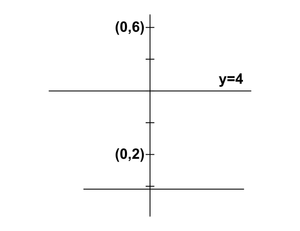 Answer: $\sum_{z \in S} |z|^2 = 385$ , which corresponds to option C.
4. ❓ Frequently Asked Questions (Exam Strategy)
❓ How many questions appear from Jee Main Math Class 11 Complex Numbers JEE Main Physics: Authentic Shift PYQs (2021-2026) with 2.5-Min Shortcut Tricks & Trap Defense in JEE Main Session 1?
❓ What is the best approach to avoid negative marks in Jee Main Math Class 11 Complex Numbers JEE Main Physics: Authentic Shift PYQs (2021-2026) with 2.5-Min Shortcut Tricks & Trap Defense?
❓ What are the most scoring topics in Jee Main Math Class 11 Complex Numbers JEE Main Physics: Authentic Shift PYQs (2021-2026) with 2.5-Min Shortcut Tricks & Trap Defense?
❓ How should I revise Jee Main Math Class 11 Complex Numbers JEE Main Physics: Authentic Shift PYQs (2021-2026) with 2.5-Min Shortcut Tricks & Trap Defense for upcoming exams?
❓ Are step-by-step solutions included in this question bank?
JEE Main & Advanced High-Yield Chapter Question Bank
Get full digital access to 500+ chapter-wise questions, comprehensive question banks, and authentic exam solutions.
Verified NCERT Curriculum • Instant Digital Access • 100% Satisfaction